

In our spotlight series, we explore a new city monthly, diving into drinking trends, where to go for great wines, and unique products or services linked to the region. Keeping our finger on the pulse when it comes to the wider world of wine is critical for us, helping us identify areas of opportunity for our clients, our eventing arm ‘Wrapped’, and for our online product offering on Uncorked. Whether curious about the habits and happenings of a city, or looking for wine-centric areas to visit in the area, our ‘spotlight on’ series is for you.
In this Spotlight, we explore wine travel in Paris, France. Few cities have played a greater role in shaping the way the world drinks, talks about and understands wine. For centuries, Paris has acted as both a marketplace and meeting point for France’s great wine regions, bringing bottles from Burgundy, Bordeaux, Champagne, the Rhône, Loire and beyond into its cafés, bistros, restaurants and historic wine shops. From the old wine merchants of Bercy and the traditional zinc bars of neighbourhood bistros to grand dining rooms, natural wine caves and contemporary wine bars, wine remains woven into the fabric of everyday Parisian life. The city may not sit within one of France’s famous wine regions, but its influence on wine culture is immense.

Paris may now be better known for drinking wine than making it, but vines were once a familiar part of the city’s landscape. Vineyards covered areas including Montmartre and Belleville for centuries; vines were already established on the slopes of Montmartre by the 10th century, supplying the growing capital with everyday wine. Today, the Clos Montmartre on Rue des Saules keeps that heritage alive. Replanted in the 1930s after local residents fought to protect the land from development, its small vineyard remains one of the most visible reminders of Paris’s viticultural past.
As Paris expanded, however, its importance increasingly came not from producing wine but from trading it. Bercy, then just outside the city limits, emerged as a major wine centre from the 17th century onwards. Its position beyond Paris meant merchants could avoid the taxes charged on goods entering the city, while its location beside the Seine made it ideal for receiving barrels by boat. Following the arrival of the railway in the 19th century, the trade expanded dramatically, with vast warehouses, cellars and merchants handling wines arriving from Burgundy, the Rhône, Provence and eventually much further afield. At its height, Bercy became one of the world’s great wine markets, supplying the bottles and barrels poured throughout the capital.
That history helps explain one of the defining characteristics of Parisian wine culture today: no single region owns the city. Burgundy, Bordeaux, Champagne, Beaujolais, the Loire, Rhône and countless smaller appellations all meet here, making Paris a shop window for French wine as a whole.
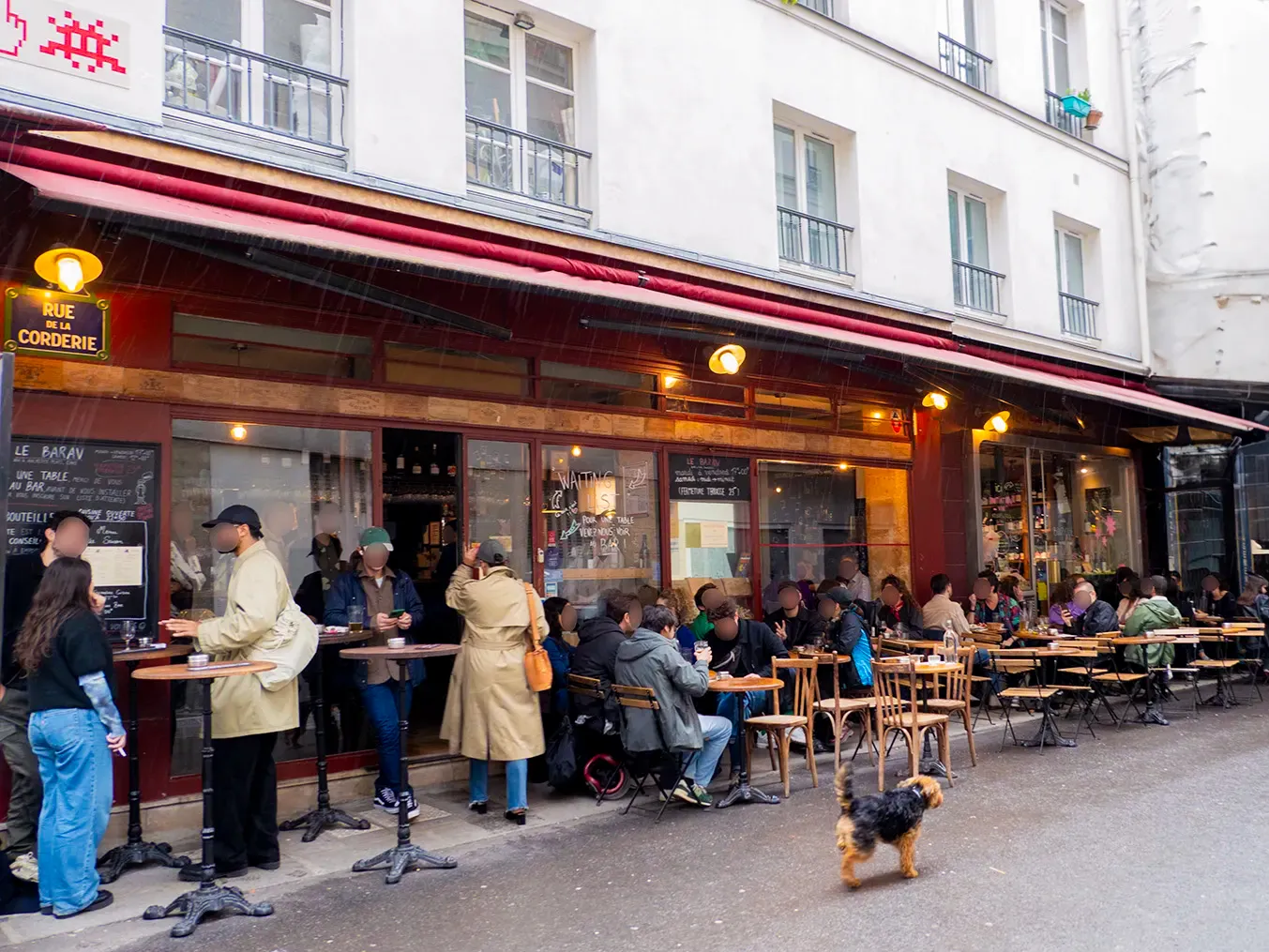
Le Barav
Location: 6 Rue Charles-François Dupuis, 75003 Paris, France
Vibe: Bustling, relaxed, and quintessentially Marais
Known for: A wine bar and adjoining cave with a broad selection of French bottles, charcuterie and easy sharing plates. Lively and unpretentious, it is an ideal early-evening stop for experiencing Paris’s neighbourhood caviste culture.

Aux Deux Amis
Location: 45 Rue Oberkampf, 75011 Paris, France
Vibe: Energetic, youthful, and effortlessly Parisian
Known for: Natural wine, small plates and a famously convivial atmosphere in the heart of Oberkampf. It becomes particularly lively as the evening progresses, making it a strong choice for those wanting to see the more social side of modern Parisian wine culture.
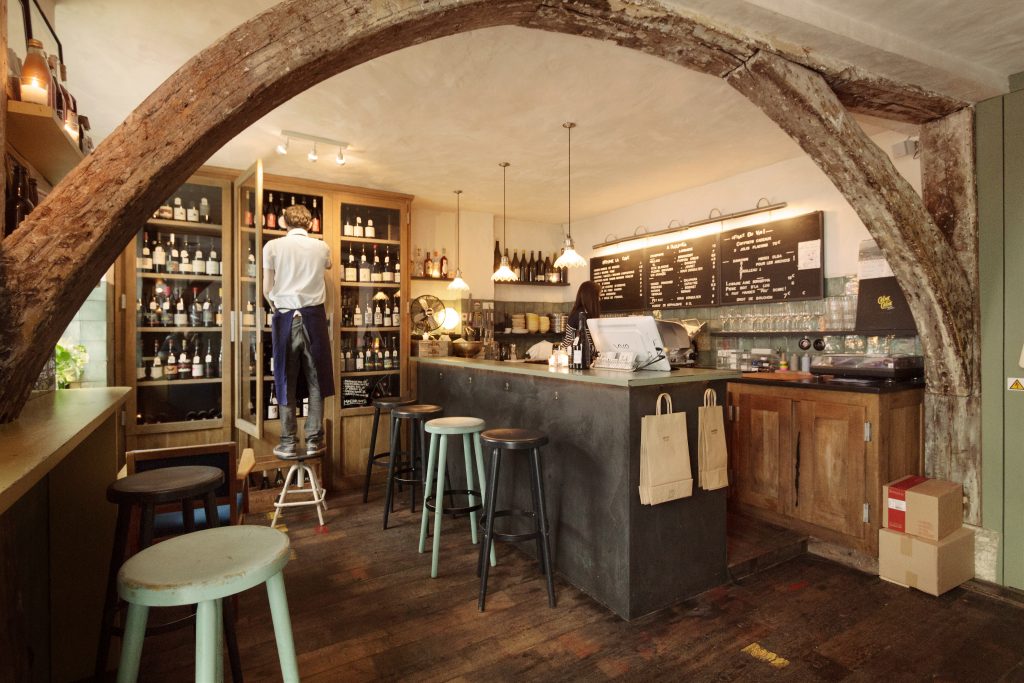
Septime La Cave
Location: 3 Rue Basfroi, 75011 Paris, France
Vibe: Intimate, minimal, and wine-focused
Known for: The wine-bar sibling of celebrated restaurant Septime, with a strong focus on natural and organic wines from independent producers alongside simple plates for sharing. Small, informal and carefully curated, it captures Paris’s contemporary cave à manger scene particularly well.

Le Verre Volé
Location: 67 Rue de Lancry, 75010 Paris, France
Vibe: Cosy, characterful, and Canal Saint-Martin cool
Known for: One of the addresses that helped establish Paris’s modern cave à manger culture, combining natural wines with proper bistro cooking. Open since 2000, it remains a particularly good example of how seriously Paris takes wine without making the experience feel formal.

To understand how Parisians actually drink wine, look beyond the grand restaurants to two enduring institutions: the cave à vin and the zinc bar. The traditional cave is the neighbourhood wine merchant, often a compact shop lined from floor to ceiling with bottles, where the caviste plays an important role in recommending producers, regions and bottles to suit both the occasion and budget. More recently, Paris has embraced the cave à manger – a hybrid between wine shop and wine bar where bottles can be selected from the shelves and enjoyed alongside charcuterie, cheese and small plates. Addresses such as Le Verre Volé, which opened beside Canal Saint-Martin in 2000, helped popularise the format and became closely associated with Paris’s enthusiasm for natural and low-intervention wines.
The zinc, meanwhile, belongs to an older Paris. From the 19th century, durable zinc-topped counters became a familiar feature of neighbourhood cafés and bistros, eventually giving the bars themselves their nickname: le zinc. These were democratic, everyday spaces – somewhere to stand at the counter for a coffee in the morning, an apéritif before dinner or a simple glass of Beaujolais or vin de table.
Together, the two capture something fundamental about Parisian wine culture. Wine does not need ceremony to be taken seriously here. It can mean an exceptional Burgundy in a Michelin-starred dining room, but just as authentically, it can be a bottle recommended by your local caviste or a quick glass poured across a well-worn counter. Paris’s modern caves may be championing a new generation of growers and winemaking styles, but the ritual remains recognisably Parisian: good wine, something small to eat and somewhere to linger.pped counters became fixtures of the city’s cafés and bars during the 19th century, eventually becoming so synonymous with neighbourhood drinking that le zinc became shorthand for the bar itself. Standing at one for a coffee, an apéritif or a glass of red remains one of the simplest ways to experience the everyday, unceremonious side of Parisian wine culture.











Get expert advice tailored to your wine investment goals. Choose a time that suits you and speak directly with a portfolio manager.
Your portfolio manager will align your plan with your goals and risk profile, building a curated selection of high-potential wines.
Stay informed with expert analysis on global wine markets, regional performance, and collector demand.
Review your portfolio, rebalance where needed, and explore optimal exit strategies to maximise returns.