


Investing in fine wine has long been a proven strategy for wealth preservation and portfolio diversification. But does adding a limited-edition label truly enhance returns for investors, or is it simply a marketing ploy? Luxury wine brands like Dom Pérignon frequently release exclusive editions with unique packaging and collaborations—commanding higher initial prices. But do these bottles appreciate more than their standard counterparts of the same vintage over time? Do limited edition labels genuinely offer superior returns or does the hype outweigh investment potential?
Performance of Fine Wine Investments
Historically, fine wine investments have delivered consistent returns. Since 1988, the market has seen average annual returns of around 10%, with long-term investments yielding more stable outcomes. These returns are greatly due to the scarcity of fine wines across the globe and the finite amount of each vintage available. Operating on basic supply and demand principles, offerings from each vintage increase in collectability as they are consumed globally, increasing the rarity of any bottles left.
In a way, all bottles of fine wine are limited-edition, especially when looking at the production numbers of more cult producers. However, some wineries have taken to also releasing limited-edition labels and collaboration series. With wine already being limited vintage by vintage, it may be safe to assume that one vintage with altered labelling would not have a great influence on collectability, but re-sale prices of fine wines currently on the market with special labelling have proven this presumption false.
Case Study: Dom Pérignon Special Editions
Dom Pérignon, renowned for its vintage Champagnes, periodically releases limited-edition bottles that have garnered significant attention. Their collaboration with Andy Warhol for their 2000 vintage brut Champagne was the first of many celebrity partnerships, harmonising the artistry of Warhol’s works with that of the brand’s sparkling wine craftsmanship. The wine bottles were adorned with one of six pop-art labels, each a different bold colour in a ‘collection-them-all’ fashion. This marrying of the art and wine worlds continued through their collaborations with the likes of David Lynch, Jeff Koons, and Jean-Michel Basquiat to name a few. Not only through art, Dom Pérignon have also expressed the creativity of what they do through music, working with Lady Gaga, Lenny Kravitz and Björk.

Taking a look at their most recent collaboration with Jean-Michel Basquiat for their 2015 vintage, bottles are currently being sold for around £220.00 per 75cl. When comparing this pricing to their standard 2015 label, selling for around £180.00, the price difference is distinct, but not worlds-apart. The question is, does this price disparity grow or shrink when the wine enters the secondary market, where prices are a distinct representation of what the market as a whole perceives the wine to be worth.
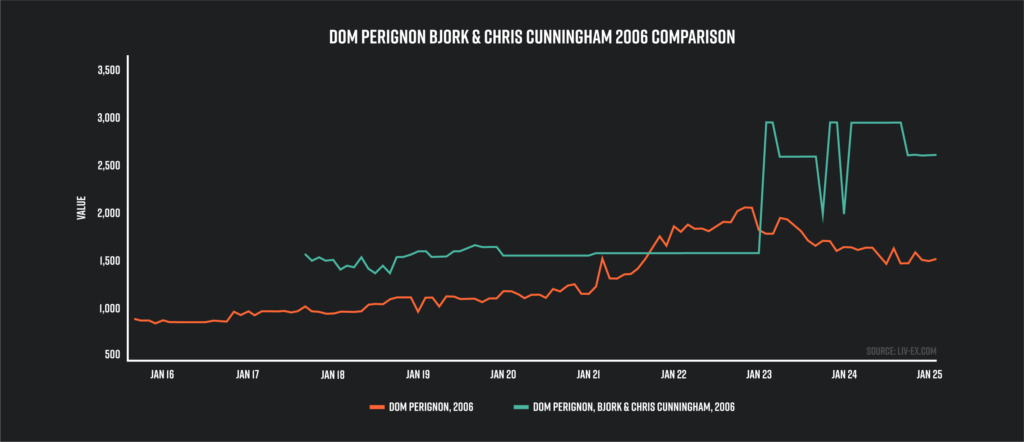
When looking at the comparative value of Dom Pérignon special releases vs. their standard edition counterparts, as is evident in the graphs below there is a difference in both value and fluctuation. Although the limited-edition labels offer higher overall value, their demand is much more variant throughout the years, as opposed to the less-wavering lower market value of the standard bottles.
Dom Pérignon Andy Warhol 2000

Dom Pérignon David Lynch 2003

Dom Pérignon Bjork & Chris Cunningham 2006
Dom Pérignon Tokujin Yoshioka 2009
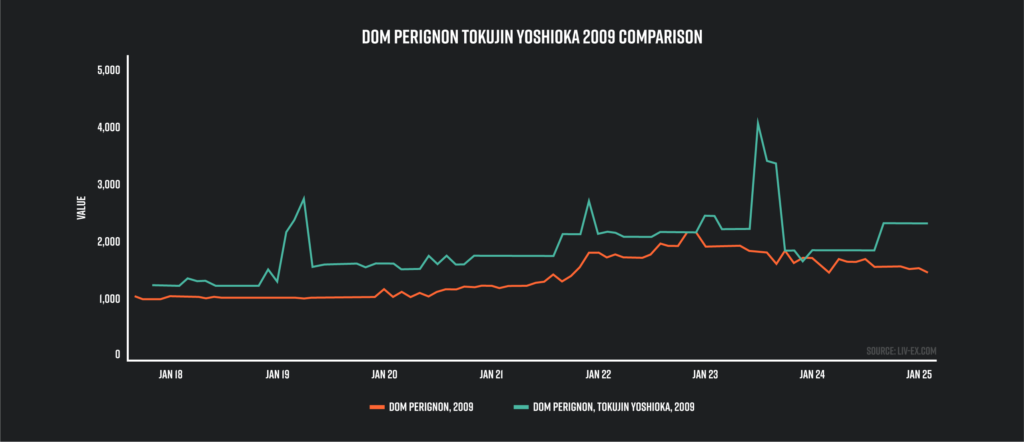
Standard vintage bottles of fine wines will always have their loyal fans and buyers, consistently stocking or drinking the brand and thus maintaining its market value. This is especially prevalent with non-vintage sparkling wines, as with blending, the quality of the wine year on year is less dependent on winemaking conditions. However, special labels always benefit from special marketing, aimed not at the brand’s loyal fans, but instead at the fans of the collaborating artist. This influx of attention on the wine at times of high marketing attracts an equally large influx of new buyers, causing those peaks in a wine’s value. But even without these peaks, the loyal fans of the wine brand are still purchasing what they would have, limited-edition label or not, maintaining that baseline value even when not marketed to new audiences.
Entry-level products
It is not only the top wines of fine wine brands boasting top-tier prices that benefit from releasing innovative new labelling. Many producers are also recognising the benefits for their entry-level products, more readily available in wine retail stores and supermarkets.
Australian winery Penfolds offer an extensive range of wines, with pricing from under £10 to back vintages auctioning for over $15,000.00 per bottle. Although their reach is already just about as wide as it could be, they frequently cast their net even further, with limited-edition releases and cases of their wines. They welcomed their first creative partner, NIGO, in 2023 whose wealth of creative experience spans art, fashion and music. Since then, NIGO has redesigned a range of Penfolds wines, including the first ever design takeover of their flagship ‘Grange’ wine.

By collaborating with NIGO, Penfolds is able to market their wines in fun and creative ways, being in no way bound to the limits of their own branding. The younger generation, perhaps unaware of the prestige of the Penfolds brand, are invited to try the wines without the pretense of brand recognition. And should they like them, this is another potential Penfolds customer for life. A bottle of Penfolds Grange by NIGO 2019 is currently selling for £750.00 at Hedonism (London), their standard counterpart, Penfolds Grange 2019 for just £575.00.

Supermarket brands also jumping onboard include the likes of 19 Crimes, launching a series of limited-edition ‘glow in the dark’ labels for Halloween last year. As with the wines of Penfolds, a consumer unaware of the 19 Crimes brand may just become an all-time fan after taking a punt on their quirky and eye-catching October release.

Investment potential
Not just a fun visual component for the consumer, limited-edition labels also offer compelling investment opportunities to collectors. As exemplified by the Dom Pérignon graphs, the re-sale price of limited-edition bottles can be staggering if sold in periods of high demand or aggressive marketing. And even without these periods, the bottles rarely sink below the value of their standard counterparts.
To maximize returns on limited-edition wine resale, investors can strategically time their sales around key events related to the collaborating celebrity—such as album releases, film premieres, or anniversaries. Additionally, seasonal demand spikes, like holiday gifting periods or major cultural celebrations, can drive up interest. Growing acclaim for associated art, music, or design movements can also elevate a bottle’s prestige, making it even more desirable in secondary markets. By staying attuned to these trends, collectors can significantly enhance their returns on limited-edition bottles. And in the meantime, enjoy the limited-edition art on their wines. Special edition wine labels – not just a pretty picture.











Get expert advice tailored to your wine investment goals. Choose a time that suits you and speak directly with a portfolio manager.
Your portfolio manager will align your plan with your goals and risk profile, building a curated selection of high-potential wines.
Stay informed with expert analysis on global wine markets, regional performance, and collector demand.
Review your portfolio, rebalance where needed, and explore optimal exit strategies to maximise returns.